Work dresses for your body shape
A work dress has to look as sharp at six as at nine. The cuts that suit each body shape at the office, the fabrics that survive a day of sitting, and the layers that go over them.
What makes a good work dress
A dress for work has a harder job than a dress for an evening. It has to look sharp at nine and still look sharp at six, after a commute, a lunch at your desk and an afternoon of meetings. Before shape, a dressmaker would check five things:
- Length when seated. Hems rise a couple of inches when you sit. Knee length standing can be well above the knee at a desk.
- Fabric that recovers. Ponte, crepe and heavier jersey bounce back from sitting; pure linen and thin cotton do not.
- Sleeves or a layer. Many offices are cold, and some dress codes expect covered shoulders. Either choose sleeves or plan the jacket.
- Pockets. Not essential, but a dress with pockets gets worn more often.
- Care. Washable fabrics are the ones you will actually wear every week.
Work dresses by body shape
Sheath dress
darts follow the curve
Hourglass
Bust and hips about the same width, with a clearly narrower waist.
A sheath with vertical darts or princess seams is the classic: it follows the curve without fuss and sits neatly under a jacket. A faux wrap in ponte is the comfortable alternative for long days.
Shirt dresses work well too, but fit them to the bust and have the waist taken in, or the buttons tend to gape. Elbow and three-quarter sleeves keep the line clean.
A-line dress
skims the hip, easy at a desk
Pear
Hips noticeably wider than shoulders and bust, usually with a defined waist.
An A-line or a softly flared knee-length dress is easy to sit in and skims the hip. A boat neck or cap sleeves add structure at the shoulder, and a cropped jacket that ends at the waist keeps the balance.
A pencil-style sheath works when the fabric has some stretch and the skirt has a walking vent; stiff fabrics tend to crease across the thighs.
Shift dress
shape from the shoulders
Apple
Fullest through the middle, often with a fuller bust and slimmer legs; the waist is less defined.
A shift in ponte or crepe falls from the shoulders and is comfortable from the first meeting to the last train. A V or keyhole neckline and elbow sleeves stop it from feeling boxy.
Faux wraps with side ruching and empire-seamed dresses are good alternatives. A longline jacket or cardigan worn open adds another vertical line.
Shirt dress
belt it, or don’t
Rectangle
Shoulders, waist and hips of similar width: a straight, balanced frame (sometimes called athletic).
A belted shirt dress builds a waist and is about as practical as office wear gets. A sheath with princess seams gives shape without a belt.
If you prefer the straight route, a shift in a textured fabric or a bold print looks deliberate. A drop waist with soft pleats is another modern option.
A-line dress
keep the shoulders soft
Inverted triangle
Shoulders or bust noticeably wider than the hips, often with slim hips and legs.
A simple bodice with an A-line or pleated skirt balances wider shoulders. A wrap’s V neckline draws the eye inward; raglan or three-quarter sleeves keep the shoulder line soft.
Skip structured shoulders and shoulder pads in jackets if you want to keep the balance; a soft, unstructured blazer or a long cardigan suits the frame.
Fabrics for the office
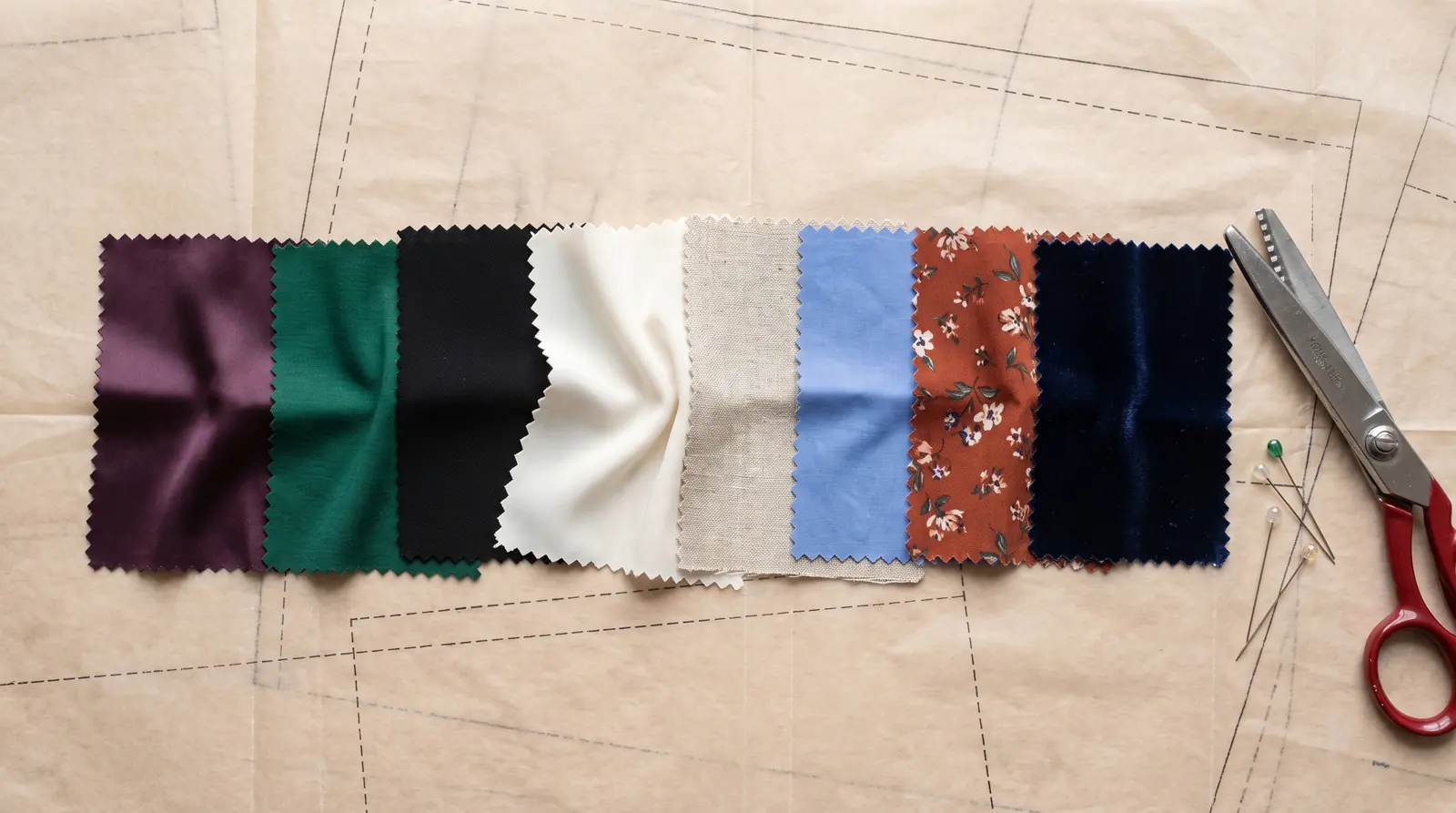
| Fabric | Good for | Watch for |
|---|---|---|
| Ponte | All-day comfort, holds shape, often machine washable | Cheaper ponte can pill where bags rub |
| Crepe (wool or polyester) | Polished drape, resists creasing | Wool crepe may need dry cleaning |
| Cotton poplin | Crisp shirt dresses, warm weather | Creases when you sit; iron or steam |
| Jersey (heavier weight) | Wrap dresses, travel | Thin jersey clings and shows lines |
| Viscose | Breathable, drapes well, prints | Can shrink; check the care label |
| Linen blend | Summer offices | Still creases, though less than pure linen |
Dress and layer pairings
- Sheath with a blazer. The most formal pairing. A blazer that ends at the hip suits most shapes; a cropped one balances a pear shape.
- Shirt dress with a cardigan. Relaxed but polished. A long, open cardigan adds a vertical line for apple and rectangle shapes.
- Wrap dress with a trench. Travel-friendly; jersey wraps pack without creasing.
- Shift with a cropped jacket. Keeps a straight dress from feeling plain.
Business formal and business casual
In business formal offices, think sheath dresses in dark, plain colors, knee length or just below, with sleeves or a jacket. In business casual offices, shirt dresses, wraps, prints and midi lengths are usually fine. Dress codes vary a lot between industries and countries, so watch what senior colleagues wear in your first weeks.
The desk test
Before you keep a work dress, sit in it for five minutes, reach forward as if typing, and stand up. Check whether the skirt rides up, the buttons pull, the neckline gapes when you lean, and whether it creases where you sat. A dress that passes that test will be worn far more than one that only looks good standing.
From desk to after-work, on one body
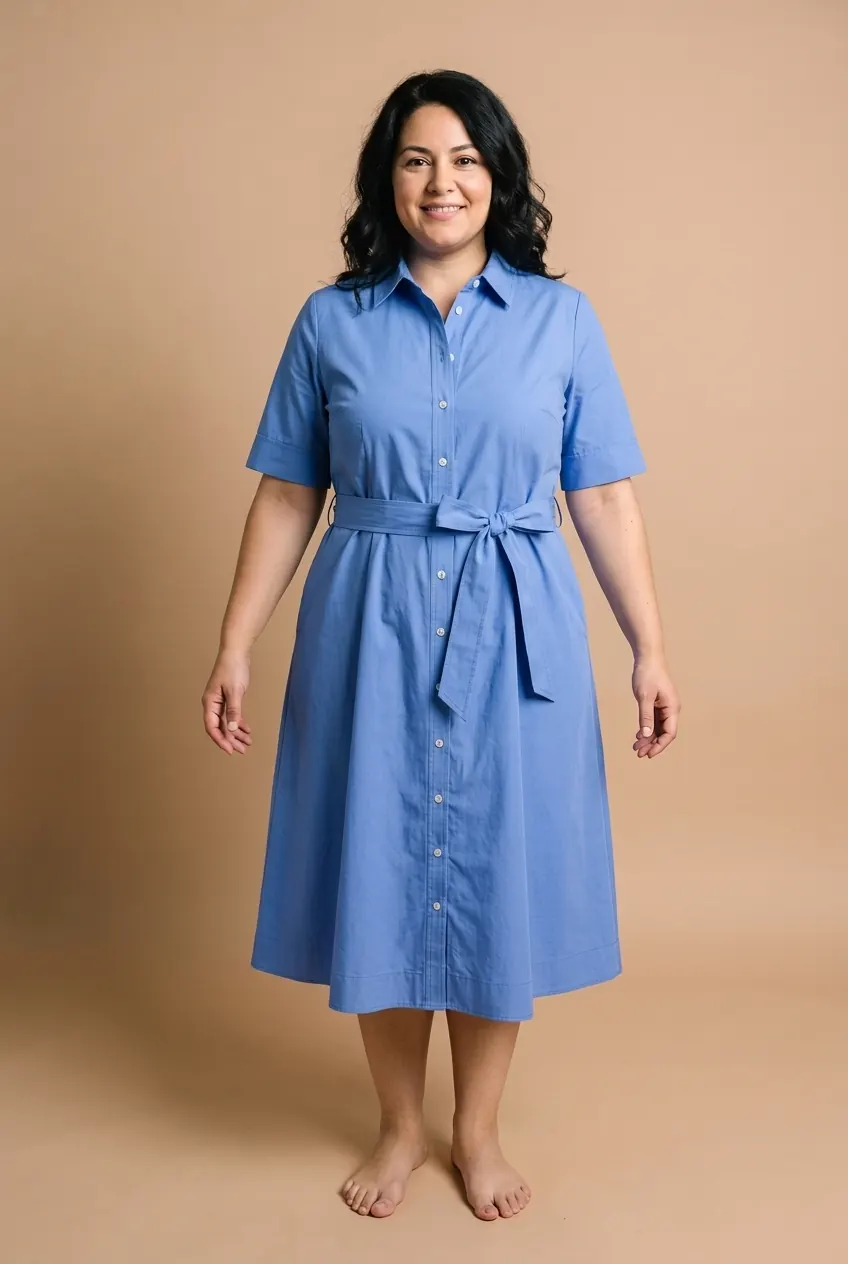
The same plus-size woman, dressed with FitInView’s try-on. The belted shirt dress is the office pick; the wrap works under a jacket too.
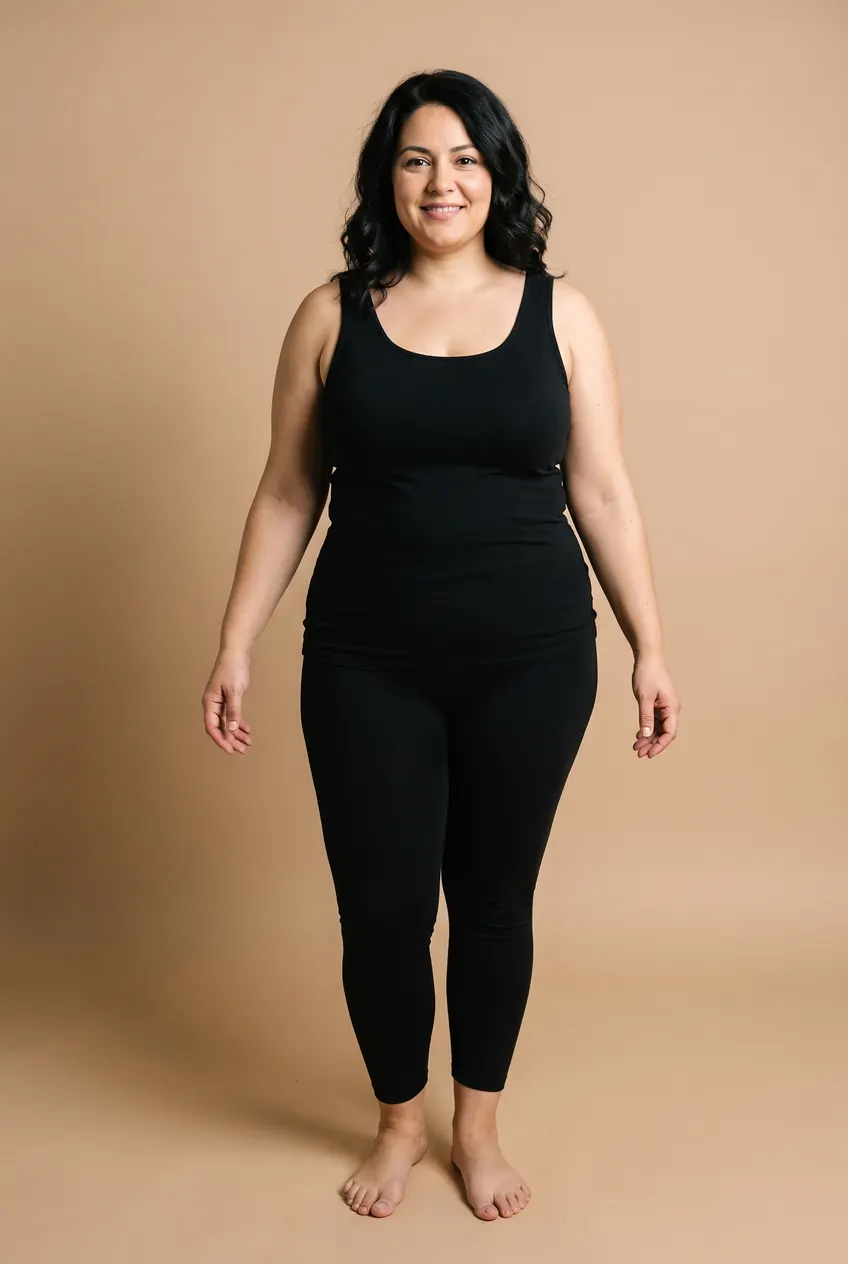
Starting photoThe photo every try-on here was made from
- A fitted tank and leggings show the outline clearly, which is what a try-on needs.
- Her shoulders and hips are close in width, with a softly defined waist.
- Every image on the other cards was made from this one photo.
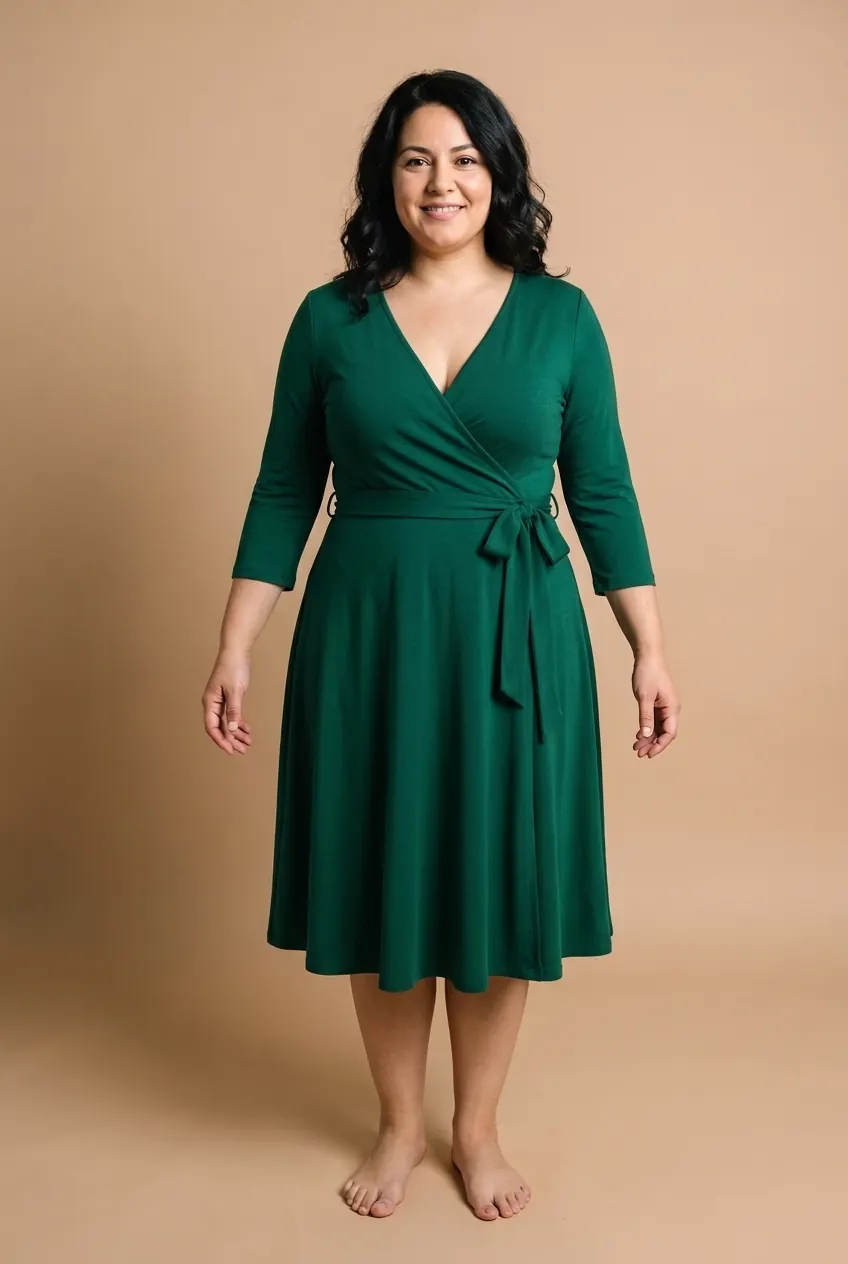
Wrap dressWedding guest
- The crossover makes one long V from the collarbone to the waist.
- The tie sits at her natural waist, the narrowest point of her frame.
- Jersey skims the hips, and the knee-length skirt swings clear of them.
Shirt dressWork
- Collar and button placket draw a vertical line from neck to hem.
- The tie belt marks the waist and the A-line skirt falls past the hips.
- Crisp poplin stands slightly away from the body instead of clinging.
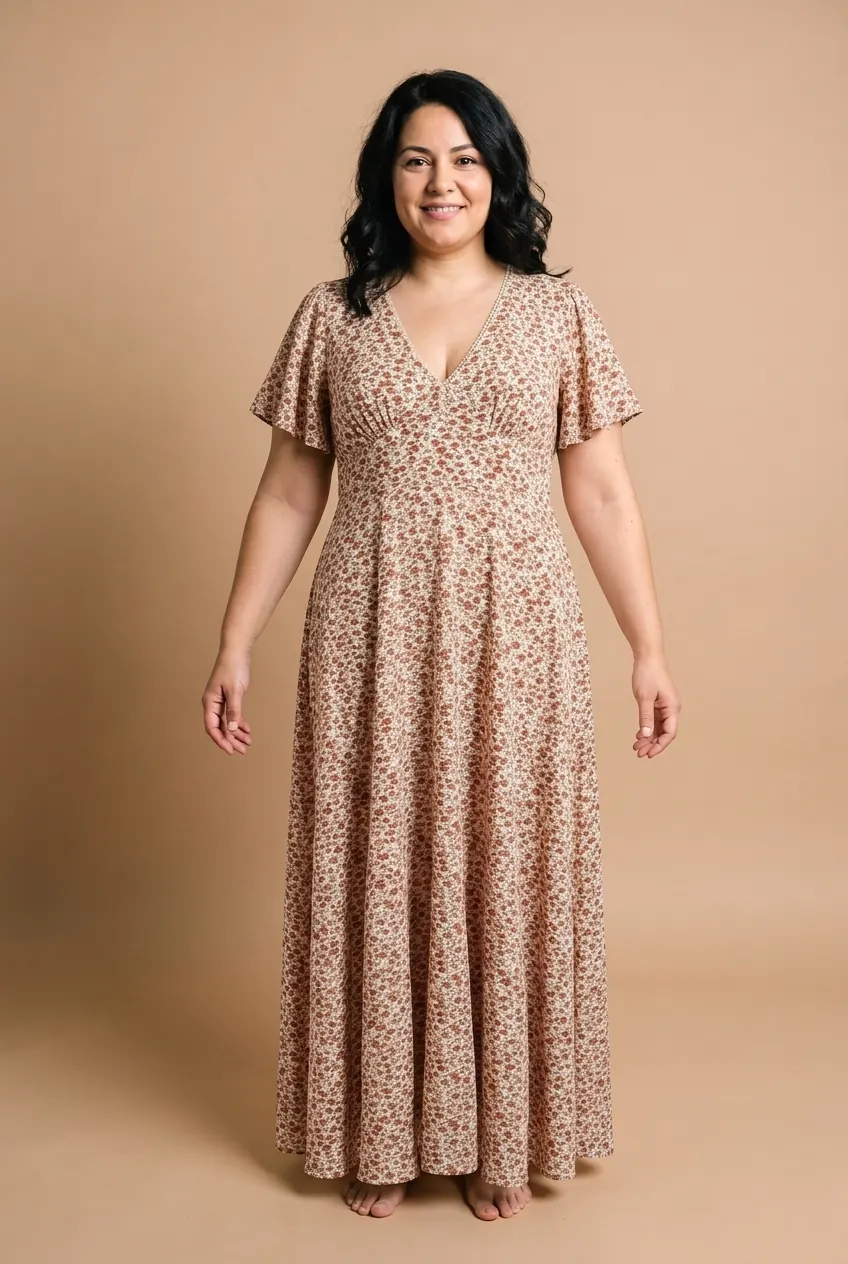
Empire maxiSummer casual
- The seam sits right under the bust; everything below falls freely.
- The V neckline and soft gathers lengthen the torso.
- Flutter sleeves cover the shoulder without adding stiffness.
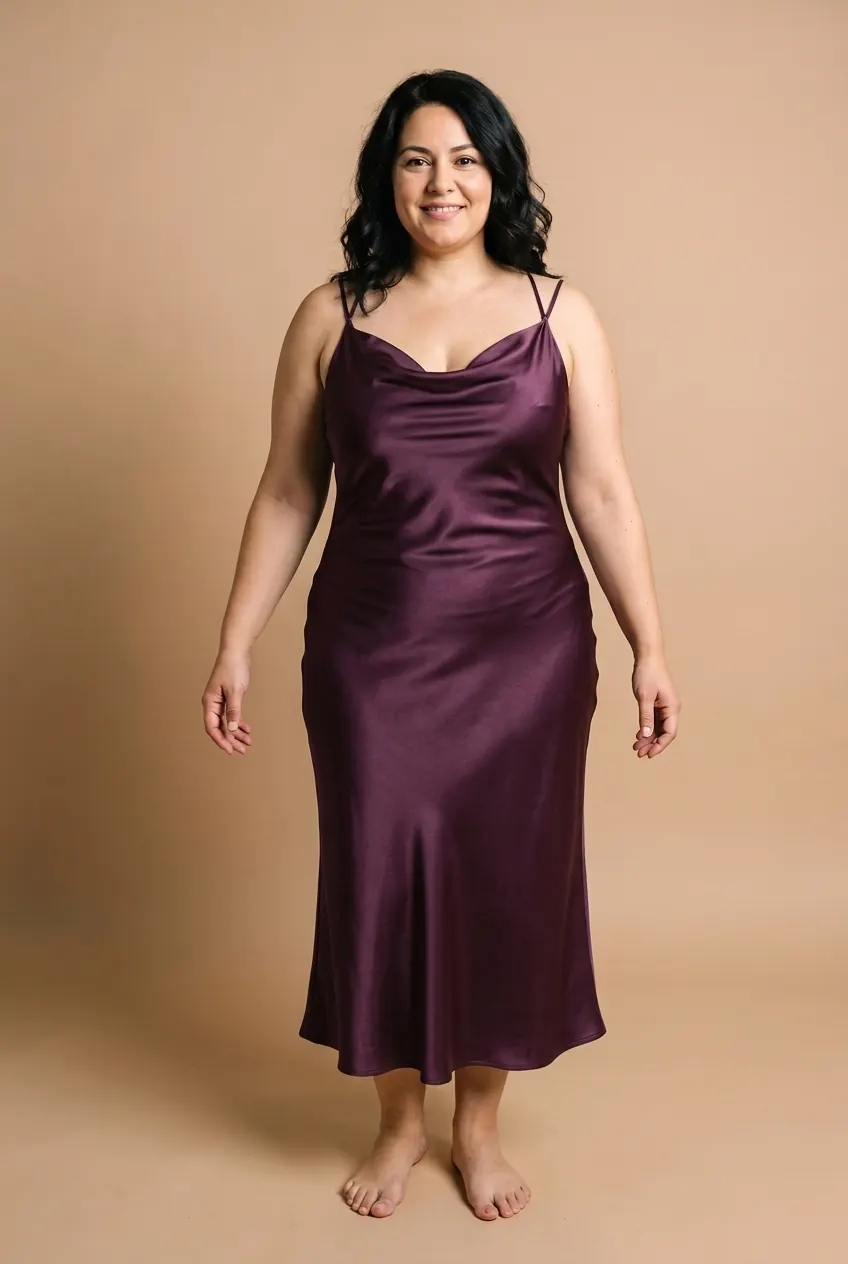
Slip dressCocktail
- The cowl drapes softly at the bust.
- Satin follows every curve, so this is the most body-skimming of the four.
- Cut on the bias, it moves as she does; a heavier satin and the right size matter most here.
One original photo, four AI try-on examples made with FitInView’s try-on. The model and the dresses are AI-generated, so no real customer is shown.
your size, your photo
Check a work dress on your own photo
Upload a photo of yourself and a photo or shop link of a dress, and FitInView creates an image of you wearing it. See a cut on your own body before you order it, alter it or wear it out.
Your first try-on is included with a free account. No card needed. Your photos are private to your account, and you can delete them.
Questions
What dress length is appropriate for work?
Knee length, just below the knee and midi are the safe range in most offices. Sit down in the dress before buying, because hems rise a couple of inches when you are seated.
Are sleeveless dresses OK for the office?
In many offices, yes, especially with a cardigan or jacket for meetings. In conservative industries or client-facing roles, covered shoulders are still common. When unsure, keep a layer at your desk.
What fabric is best for a work dress?
Ponte and crepe are the workhorses: they hold their shape, resist creasing and are often machine washable. Cotton poplin works in warm weather; linen blends crease less than pure linen.
More dress guides
- Neckline guideThirteen necklines drawn and explained, with an explorer for bust, shoulders and shape.
- Dress length guideEight dress lengths, and a hem planner that shows where a listed length ends on you.
- Wedding guest dressesThe right cut for your shape, the dress code and the venue, and the colors to skip.
- Maxi dressesEmpire, wrap, tiered or slip: maxi cuts by shape, and how height changes them.