Wedding guest dresses for your body shape
Start with the invitation, then the venue, then your shape. Here is the cut a dressmaker would usually suggest first for each body shape, and how to adapt it to the dress code.
Three questions before body shape
Body shape decides which cut you will feel best in. But a wedding has its own rules, and three questions come first.
- What does the invitation say? A dress code (casual, cocktail, formal, black tie) sets the length and fabric. If there is none, the time and the venue are your clues.
- Where is it? A beach, a barn, a church and a city hotel each change the shoes, the fabric and how much coverage you need.
- Has the couple asked for anything? A color theme, a cultural dress code, or no white at all.
Then read the section for your shape. Each starts with the cut a dressmaker would usually suggest first, drawn as a pattern piece.
Wedding guest dresses by body shape
Wrap dress
tie it at the natural waist
Hourglass
Bust and hips about the same width, with a clearly narrower waist.
Look for a dress with a waist: a wrap, a fit-and-flare, or a belted midi. Fabrics that drape, such as crepe, jersey with some weight, or a soft satin, follow the curve from bust to hip without standing away from it.
V, sweetheart and wrap necklines suit a fuller bust and balance it with the hips. For an evening reception, a trumpet gown that is fitted to the knee and then flares is one of the most dramatic options for this shape.
Watch for: loose, straight cuts with no waist shaping, which hang from the bust. If a dress you love is shapeless, a narrow belt usually fixes it.
Fit-and-flare
detail on the bodice, plain skirt
Pear
Hips noticeably wider than shoulders and bust, usually with a defined waist.
A fitted bodice with a skirt that flows away from the hips is the classic choice: fit-and-flare, A-line, or a soft tiered midi. Put the interest at the top: a boat or square neckline, puff or flutter sleeves, an embellished bodice.
Fabrics with a little body, like crepe, georgette over a lining, or taffeta for formal weddings, float past the hip instead of clinging to it. Prints work well when the larger motifs are on the bodice.
Watch for: bias-cut satin slips and thin jersey, which trace the hip, and details such as flap pockets or bows right at the hip. Both are fine if that is the look you want.
Empire waist
let the skirt fall from under the bust
Apple
Fullest through the middle, often with a fuller bust and slimmer legs; the waist is less defined.
Empire waists and wrap dresses are the reliable pair. An empire seam gives the dress its shape right under the bust and lets the skirt fall freely past the middle; a wrap adds a long V and ruching that skims instead of clings.
Show what you like best. If you love your legs, a knee-length dress with a fluid skirt; if you prefer more coverage, a maxi in chiffon or crepe. Sleeves in sheer chiffon give coverage without weight.
Watch for: wide belts at the natural waist, bodycon cuts and stiff fabrics that sit out from the middle.
Slip dress
lean into the straight line
Rectangle
Shoulders, waist and hips of similar width: a straight, balanced frame (sometimes called athletic).
Decide whether you want to build curves or celebrate the line. To build them, a fit-and-flare, a peplum, a belted dress or ruffles. To celebrate the line, a bias-cut slip, a column dress or a drop waist: these suit a straight frame better than most shapes.
Sweetheart, cowl and halter necklines add shape at the top. Texture (lace, jacquard, pleats) gives a plain cut more interest.
Watch for: soft wrap dresses with no structure, which can gape and slide off the waist. A faux wrap holds its shape better.
A-line dress
volume below the waist
Inverted triangle
Shoulders or bust noticeably wider than the hips, often with slim hips and legs.
Keep the bodice simple and add movement below the waist: A-line, fit-and-flare, or a full midi skirt. A V, halter or one-shoulder neckline narrows the shoulder line.
Put prints, pleats or embellishment in the skirt. Soft fabrics on top (chiffon, jersey) keep the shoulders quiet; a skirt in taffeta or a gathered viscose balances them.
Watch for: puff sleeves, boat necks and off-shoulder bands, which widen the top. Choose them if you want the shoulders to be the statement.
Dress codes, in dress terms
| Dress code | Length | Fabrics | Notes |
|---|---|---|---|
| Casual or garden | Knee to midi | Cotton, linen blends, viscose, chiffon | Block heels or flats if the ceremony is on grass. |
| Semi-formal or cocktail | Knee to midi | Crepe, satin, lace, chiffon | The most common dress code; a polished midi is rarely wrong. |
| Formal | Midi to floor | Satin, crepe, chiffon, lace | Long dresses are common, a dressy midi often works too. |
| Black tie | Floor | Satin, velvet, taffeta, crepe | A full-length gown; black tie optional also allows an elegant midi. |
Season and venue
- Beach. Chiffon, linen blends and viscose; a midi or maxi that you can lift above the sand; flat sandals. Structured satin and velvet feel heavy in heat.
- Garden or barn. Midi lengths stay clear of grass and gravel. Block heels or wedges, and a light layer for the evening.
- Religious ceremony. Many churches, temples, mosques and gurdwaras expect covered shoulders, and some expect covered knees or a covered head. A sleeved dress, or a wrap you can drape and remove later, solves it.
- Evening in the city. Darker colors, satin or velvet, ankle to floor length if the dress code is formal.
- Winter. Long sleeves in crepe or velvet, or a dress with a tailored coat; opaque tights are fine at most daytime winter weddings.
Colors to think twice about
White, ivory and cream belong to the bride at most Western weddings, including dresses that only look white in photos. In Chinese and many South Asian weddings, red is traditionally the bride’s color, so guests often avoid it. Black is accepted at most modern Western weddings, especially in the evening, but some families still see it as a mourning color. When in doubt, ask someone close to the couple.
The fitting-room test for a wedding
A wedding is a long day of sitting, eating, hugging and dancing. Before you commit, do this in the dress:
- Sit down and stand up a few times: does the skirt ride up, does the waist dig in?
- Raise both arms as if to hug someone taller than you.
- Walk briskly and climb a step: a narrow maxi or mermaid hem needs a slit or a kick pleat.
- Check the back in a mirror: a long day shows every strap and seam.
One guest, four dresses: wrap, shirt, maxi, slip
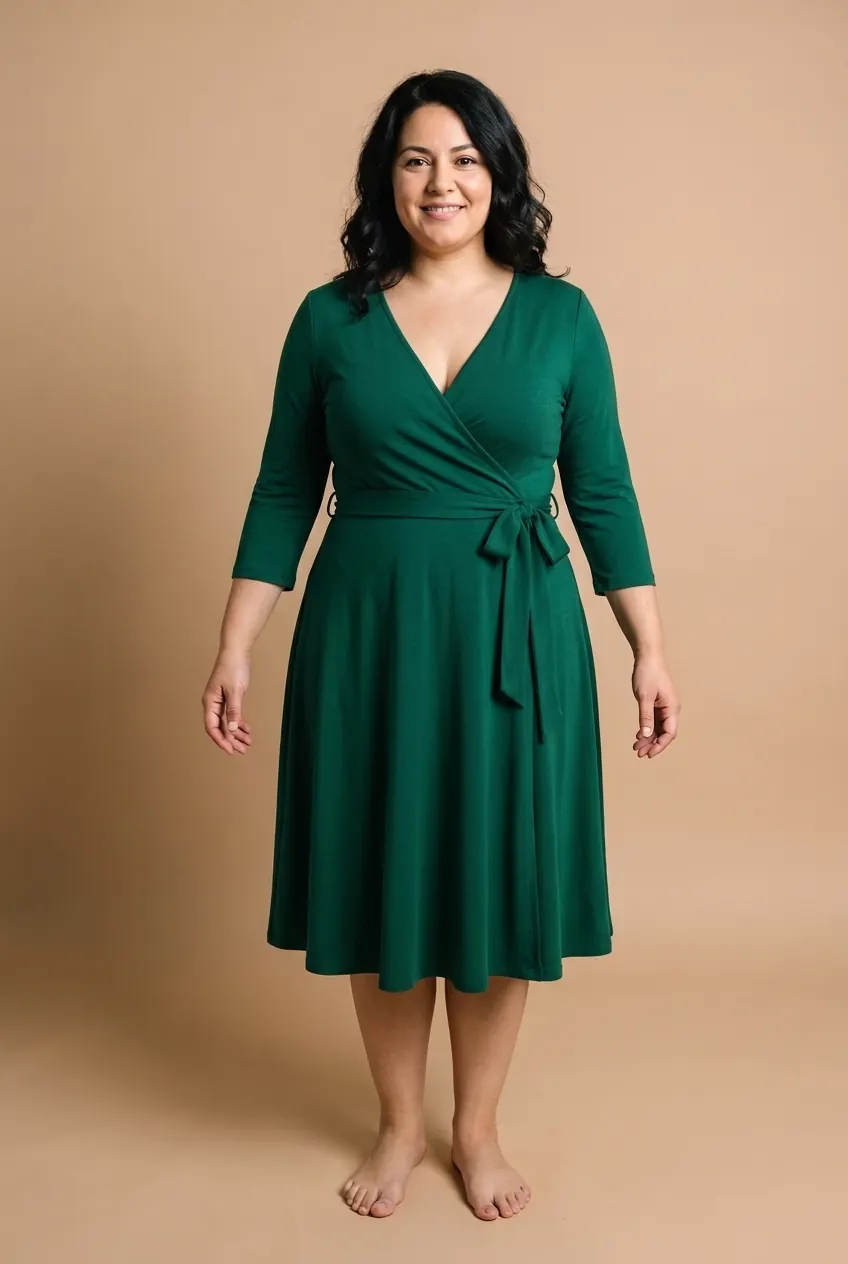
One plus-size woman, dressed with FitInView’s try-on in four cuts. For a wedding, the wrap and the empire maxi are the easy choices; the slip suits an evening reception.
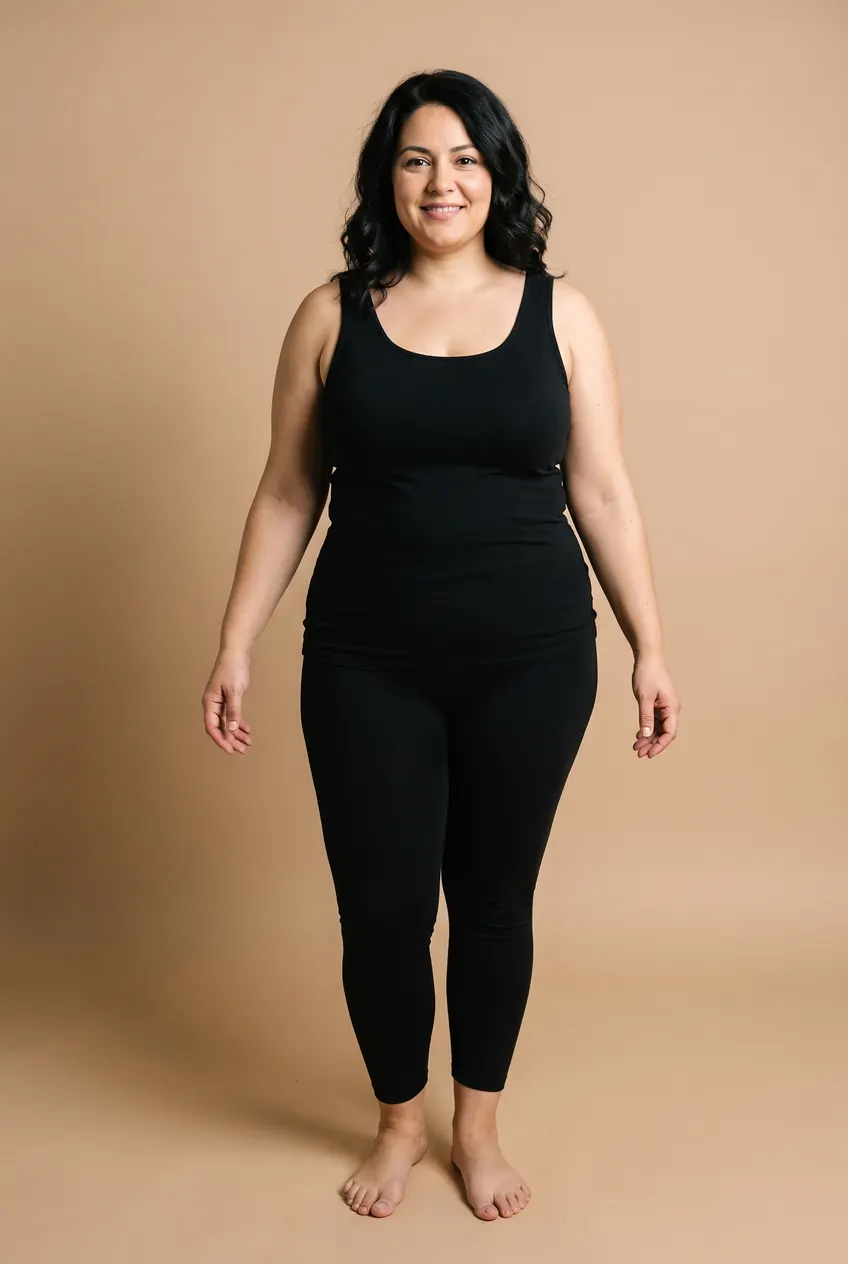
Starting photoThe photo every try-on here was made from
- A fitted tank and leggings show the outline clearly, which is what a try-on needs.
- Her shoulders and hips are close in width, with a softly defined waist.
- Every image on the other cards was made from this one photo.
Wrap dressWedding guest
- The crossover makes one long V from the collarbone to the waist.
- The tie sits at her natural waist, the narrowest point of her frame.
- Jersey skims the hips, and the knee-length skirt swings clear of them.
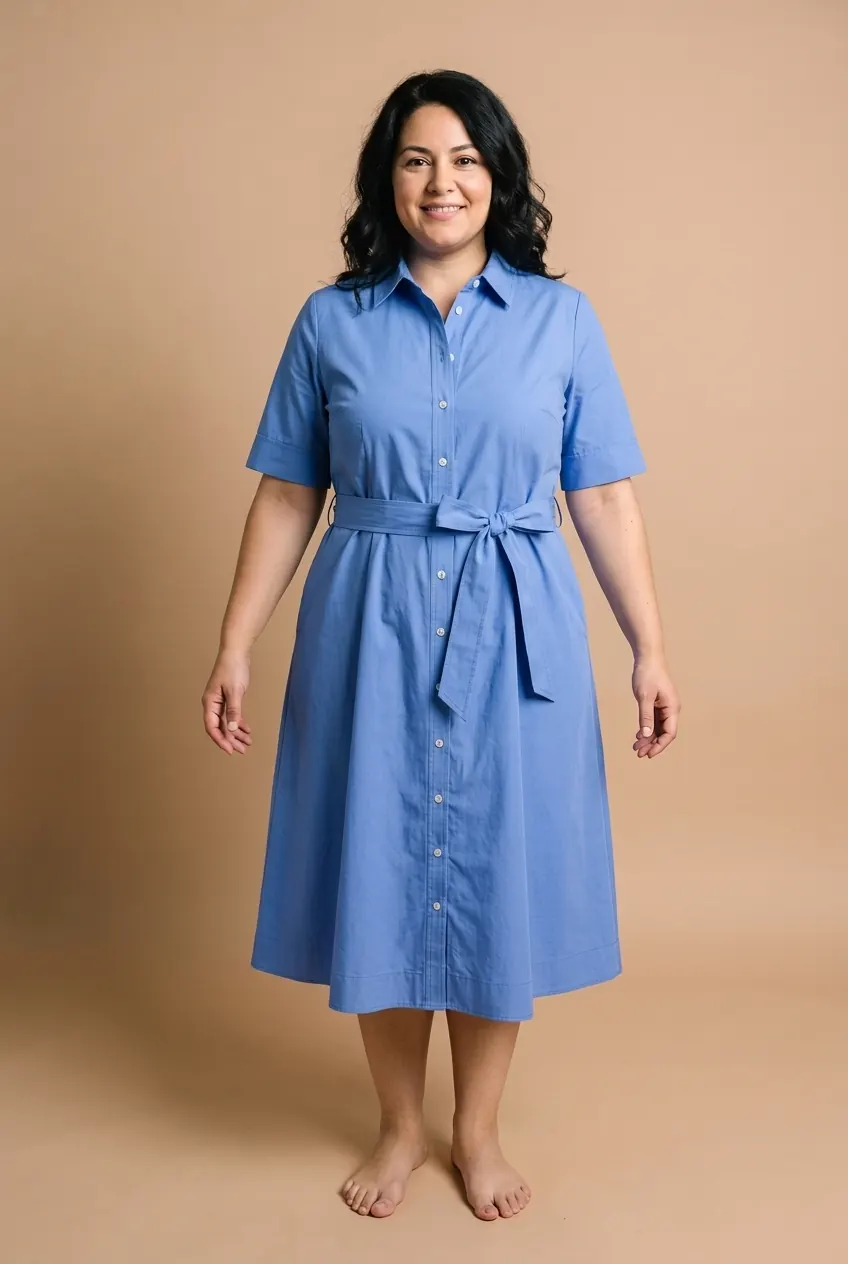
Shirt dressWork
- Collar and button placket draw a vertical line from neck to hem.
- The tie belt marks the waist and the A-line skirt falls past the hips.
- Crisp poplin stands slightly away from the body instead of clinging.
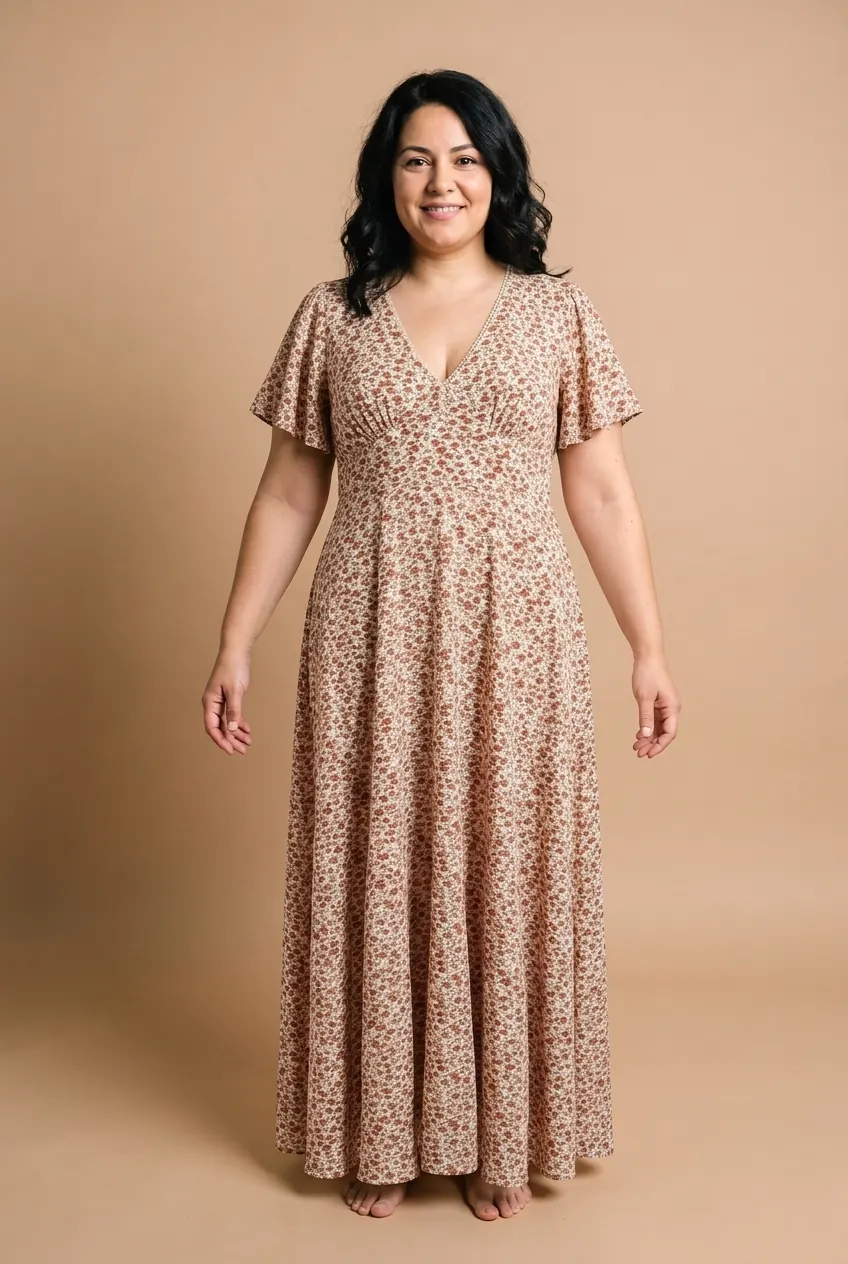
Empire maxiSummer casual
- The seam sits right under the bust; everything below falls freely.
- The V neckline and soft gathers lengthen the torso.
- Flutter sleeves cover the shoulder without adding stiffness.
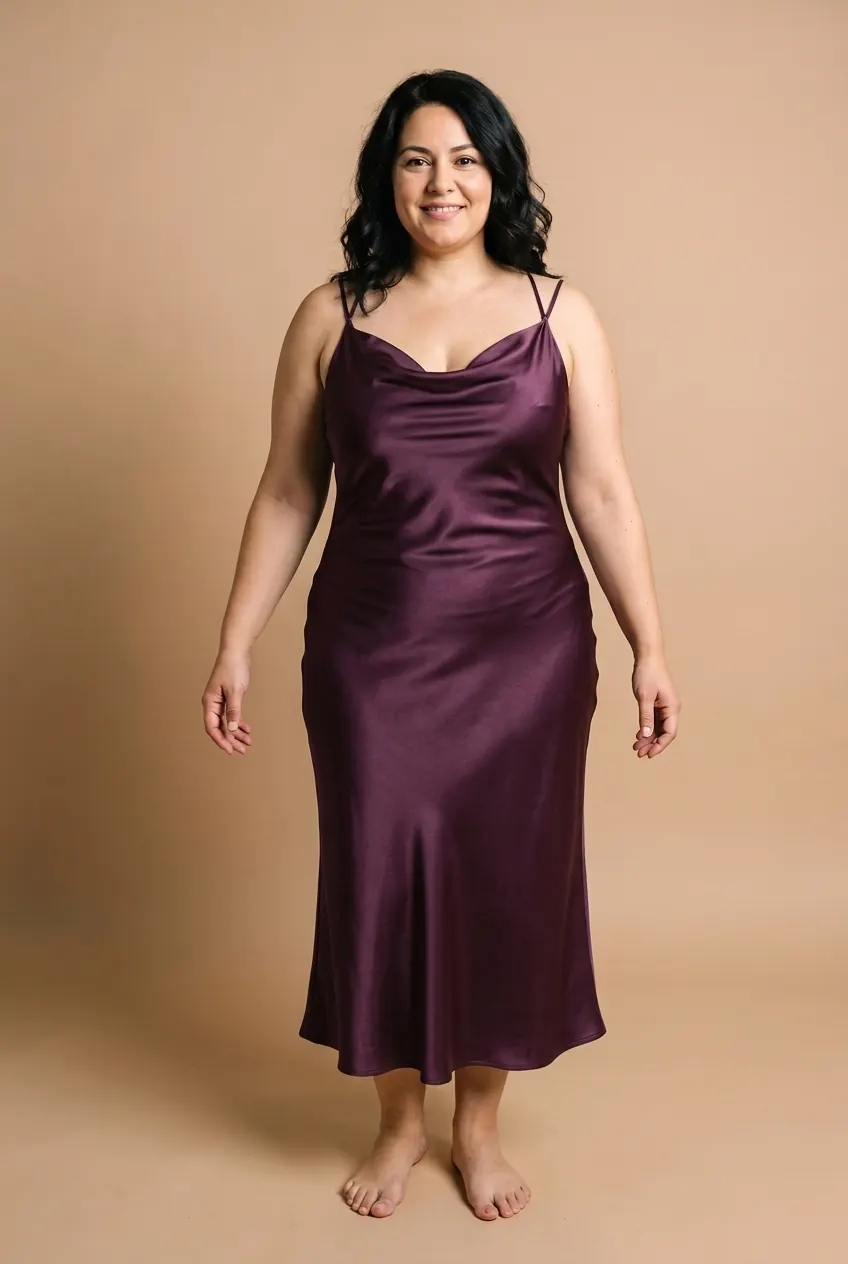
Slip dressCocktail
- The cowl drapes softly at the bust.
- Satin follows every curve, so this is the most body-skimming of the four.
- Cut on the bias, it moves as she does; a heavier satin and the right size matter most here.
One original photo, four AI try-on examples made with FitInView’s try-on. The model and the dresses are AI-generated, so no real customer is shown.
your size, your photo
Try the dress on before the RSVP
Upload a photo of yourself and a photo or shop link of a dress, and FitInView creates an image of you wearing it. See a cut on your own body before you order it, alter it or wear it out.
Your first try-on is included with a free account. No card needed. Your photos are private to your account, and you can delete them.
Questions
Can I wear black to a wedding?
At most modern weddings in the US and Europe, yes, especially in the evening. Some families and cultures still consider it a mourning color, so if you are unsure, ask someone close to the couple or choose a deep color instead.
What length should a wedding guest dress be?
Follow the dress code. Daytime and casual weddings usually mean knee to midi, cocktail means knee to midi in a dressier fabric, and formal or black tie means ankle to floor.
What if I am between two body shapes?
Read both sections. The advice overlaps more than it differs, and a wrap or an A-line midi works across most shapes. Then try the dress on, in person or with a try-on, before the day.
More dress guides
- Neckline guideThirteen necklines drawn and explained, with an explorer for bust, shoulders and shape.
- Dress length guideEight dress lengths, and a hem planner that shows where a listed length ends on you.
- Work dressesSheath, shirt dress, wrap or shift: office cuts by shape, fabrics and the desk test.
- Maxi dressesEmpire, wrap, tiered or slip: maxi cuts by shape, and how height changes them.